Authentic Assessment When the Product Can Be Generated
In 1990 Grant Wiggins set out the case for authentic assessment in a digest for the California Assessment Program. An assessment is authentic, he wrote, when student performance on worthy intellectual tasks is directly examined, rather than inferred from proxy items on a standardised test. Teaching to such a test was no vice, because the test was worth teaching to.
For thirty years the case rested on engagement and validity: authentic tasks motivated students better than multiple choice and measured something closer to the competence a school claimed to certify. Those reasons still hold. But language models that write a competent essay on demand have added a justification Wiggins never needed.
The short answer. Authentic assessment has acquired a second defence. A task that mirrors real intellectual work, and that makes the doing of it visible, is harder to hand to a generator and produces its own evidence of authorship. The visibility is the protection. An authentic-sounding task completed out of sight protects nothing.
What Wiggins meant, and what he did not say
Wiggins's definition is narrower than the word "authentic" has since become. His examples were performances: a debate, a piece of original research, a portfolio judged against public criteria. The digest itself anticipates the cost objection and answers that the expense buys results a teacher can use. What it does not say is anything about who did the work. In 1990 the performance and the performer were the same thing.
That silence is the gap machines walked through. A task can be authentic in Wiggins's sense and still arrive as a finished product from an unsupervised desk. Liu and Bridgeman at the University of Sydney were blunt in 2023: assessments that are authentic, reflective, personal or contextualised can all be completed by current generators. Authenticity of task, on its own, is no defence.
The second justification: process that leaves evidence
What survives is a property authentic tasks tend to have and proxy tests never did. They unfold over time, in stages, with intermediate products: source notes and a working thesis, a plan and raw readings, a mistake and its correction. When assessment is designed to see those stages, the task becomes awkward to outsource, because a generator produces final prose fluently and intermediate mess badly, and the stages themselves become the evidence of authorship.
This is the argument this publication made in Proof of Work: the product no longer implies the process, so assessment must be redesigned to see the process directly. Authentic assessment is the tradition best placed to do that, because its tasks already have a process worth seeing, and the lineage runs back to the cognitive apprenticeship essay of Collins, Brown and Holum in 1991, whose programme was to make expert thinking visible so novices could observe and practise it. Making thinking visible for instruction turns out to make it visible for evidence as well.
The two-lane model: secure and open assessment
The Tertiary Education Quality and Standards Agency's 2023 advice for Australian higher education, Assessment reform for the age of artificial intelligence, argues that trustworthy judgments about learning cannot rest on securing every task, and should rest on programme-level design in which some assessments are secured and the rest assume students will use whatever tools exist. Liu and Bridgeman named the structure: two lanes.
Lane one is secure and supervised: in-class work, oral examinations, live practical tasks, and occasional sitting examinations. Its purpose is certification: it alone can answer "can this student do this, unaided, when it counts." Lane two is open: take-home work in which assistance is permitted within stated limits, disclosed, and made part of what is assessed. Its purpose is learning, and its evidence is process: drafts, version history, and an account of what was asked of a machine and what was kept.
The two lanes must be planned together. A school that secures nothing has no certifying evidence; a school that secures everything has abandoned the tasks Wiggins argued for. Security belongs where the stakes are.
Authentic assessment examples across four subjects
History: source analysis with an oral element. Students take four sources studied in class and argue which one a machine summary of the period most neglects. The analysis sits in the open lane, drafted in a tracked document. The oral element is the secure lane: three minutes, sampled, on which source the student found hardest to place and why. A generator can write the analysis. It cannot sit the three minutes, which is why the oral examination has returned to ordinary use.
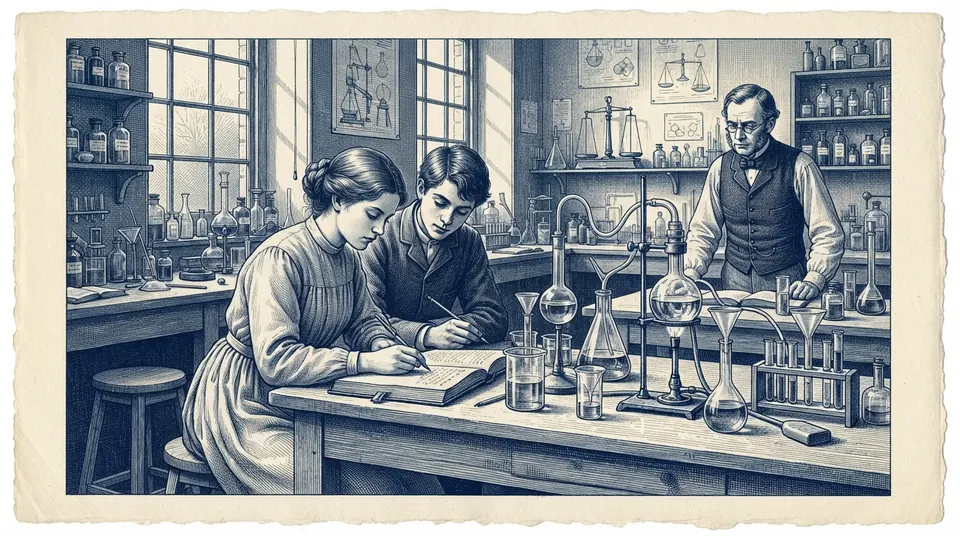
Science: the laboratory notebook. The report is generated easily; the notebook is not. Students keep a dated record of plan, readings, anomalies and corrections, marked for completeness rather than polish, and the discussion section is written in the room from the group's own data table.
Mathematics: shown reasoning. The redesign grades the reasoning rather than the answer, requires a step the student got wrong and corrected, and asks in class for the method to be explained on a fresh problem. A correct answer with no trail earns little.
English: the draft trail and the reflection. The essay is submitted with its version history and a short account of how it changed: the claim abandoned, the paragraph reordered. Where a language model was used, a disclosure statement records what was asked and what was kept, and is assessed as part of the work.
What each assessment type actually yields
| Assessment type | How easily the product can be generated | Process evidence it yields | Lane |
|---|---|---|---|
| Take-home essay, final text only | Trivially | None | Open |
| Essay with version history and draft trail | Final text easily; the trail poorly | Composition over time, visible revision | Open |
| Lab report from a supplied data set | Easily | None unless a notebook is required | Open |
| Lab notebook kept during the investigation | Poorly; dated anomalies are hard to fake afterwards | The investigation as it happened | Open |
| Problem set, answers only | Trivially | None | Open |
| Shown reasoning plus an in-class re-solve | Steps easily; the supervised re-solve cannot be | Method, error and correction | Both |
| Timed in-class writing | Cannot be, given no access | The performance itself | Secure |
| Oral defence, sampled | Cannot be | Command of the work in real time | Secure |
| Reflection on process | Easily, in the abstract | Only when checked against the drafts it describes | Open |
Three ways the redesign fails
Authentic in name only. A task can wear the vocabulary of authenticity and still be a product returned from an unsupervised desk. If the assignment could be pasted into a generator and come back complete, it is authentic in name only. The test is whether the design requires anything the student must do in view, or leave behind while doing.
Workload explosion. Wiggins conceded that authentic tasks cost more to mark, and a redesign that adds process evidence to every assignment will collapse within a term. The answer is proportion: oral checks on a sample, with every submission eligible; trails skimmed for shape rather than marked line by line; a process portfolio that collects the material once across a year. The same proportionality applies to homework, which no school should pretend to secure.
Grading the reflection instead of the work. The reflective account is the easiest part of an open-lane task to generate, because it is written in the abstract about a process the reader has not seen. Reflection earns credit only where it can be checked against the trail: this paragraph was reordered on Tuesday, and the version history shows it. Without that anchor, a reflection is one more product. A school built this way has little use for text detectors, whose error rates are reviewed in this lane's essay on detector accuracy: the open lane invites disclosure and the secure lane admits nothing to detect.
Frequently asked questions
What is authentic assessment?
Grant Wiggins's 1990 definition is the standard one: an assessment is authentic when student performance on worthy intellectual tasks is directly examined, rather than inferred from proxy items. Authentic tasks resemble the work practitioners do and are judged against public criteria. The term is now used loosely for any applied task.
Can a language model complete an authentic assessment?
Usually, if the assessment is a finished product submitted from an unsupervised setting. Liu and Bridgeman's 2023 Sydney guidance states that authentic, reflective and contextualised tasks can all be completed by current generators. What a model cannot complete is the visible part: a supervised performance, a live oral answer, a dated trail of drafts.
What is the two-lane approach to assessment?
A design in which some assessments are secured and supervised, to certify that a student can perform unaided, and the rest are open, with assistance permitted, disclosed and assessed through process evidence. It appears in Australia's TEQSA assessment reform advice and was named by the University of Sydney.
Does authentic assessment increase teacher workload?
It can, and Wiggins acknowledged the cost in 1990. The redesign stays affordable through proportion: security concentrated on the few tasks that certify, oral checks sampled rather than universal, trails skimmed for shape, and one portfolio per student rather than fresh process evidence for every assignment.
Where this leaves a school
Authentic assessment was argued into schools on motivation and validity, and those arguments remain sound. The tradition now carries a second justification: tasks that mirror real intellectual work, and make the doing of it visible, survive a generator because they leave evidence of learning as a by-product of learning. Wiggins asked schools to examine performance directly. The machine has made the request compulsory.
The practical shape is the two-lane model: a secure lane that certifies and an open lane that teaches, planned together. The Academic Integrity hub sets out the evidence each lane relies on; the essay on viva voce as proof of learning describes the secure lane's oldest instrument.