Academic Integrity
Academic integrity used to be enforced by inspecting the product. A submitted essay implied the thinking that produced it, and a teacher who suspected otherwise compared the text with the student's earlier work or ran it past a plagiarism index. Generated text has ended that arrangement. A competent essay on almost any school topic can now be produced in seconds by a student who has not read the sources, and no examination of the finished page restores the link between product and process. This pillar collects the Initiative's work on what replaces it.
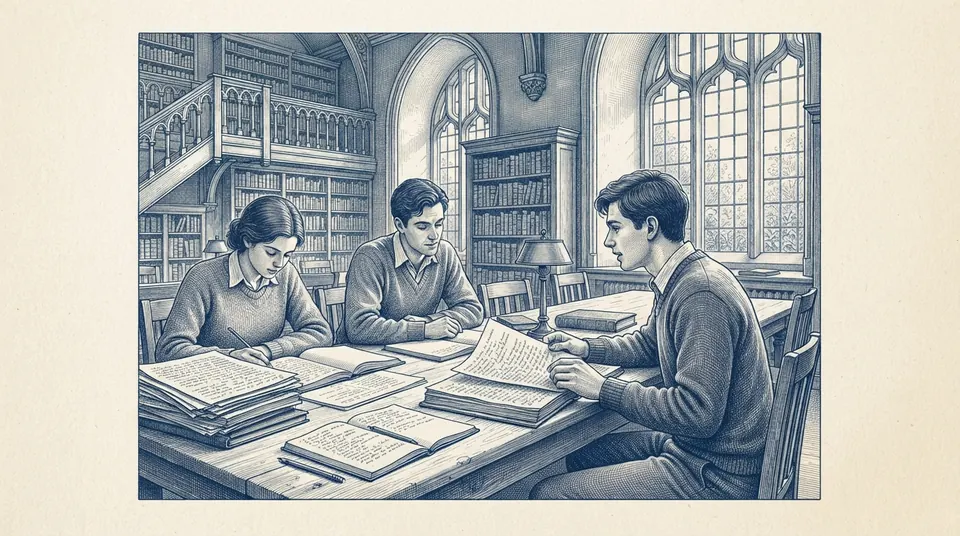
The position this pillar takes
The editorial line is the one this publication set out in assessment when product severs from process: the reliable evidence of learning now lives in the process, and integrity has to be evidenced rather than policed. Three consequences follow, and every essay below works one of them out.
First, detection is a weak witness. The published evaluations put the common detection tools below 80 percent accuracy, fragile to paraphrase, and biased against writers working in a second language. A score is a reason to ask a question, never a finding. Second, authorship is shown by command of the process: drafts, version history, notes, a disclosure of what assistance was used, and the ability to explain and extend the work in conversation. Third, the institution carries the burden of proof, and a fair procedure has to say so in writing before the first case arrives.
None of this is new to the Initiative. Collins, Brown and Holum argued in 1991 that schooling had hidden the very thinking it meant to teach, and their case for making thinking visible applies clause for clause to how learning is now judged. A master never graded a chair sight unseen. The essays here apply that principle to the marked essay.
Where to begin
Start with what academic integrity means when machines can write, which redefines the term for the present and separates plagiarism, contract cheating, unauthorised assistance and undisclosed generation. Then read the evidence on detection: how accurate the detectors are, why they flag non-native English writers, and whether a teacher can detect generated writing by reading it. A student or parent facing an accusation should go straight to what a falsely accused student can show.
The evidence that holds
The constructive half of the pillar describes the records that establish authorship without surveillance software. Version history as evidence of authorship explains what a document's edit trail shows and what it cannot. The process portfolio revisits the 1990s portfolio movement and what it learned about reliability. The oral exam returns makes the case for sampled viva voce checks as the oldest authorship test there is. Authentic assessment when the product can be generated sets out the two-lane model of secure and open assessment. Content Credentials in the classroom covers signed provenance for media work, with its limits stated plainly.
Disclosure and policy
Honest use has to be recordable, or the policy punishes candour. How to cite AI assistance reviews what the style guides say and why an acknowledgement usually fits better than a reference entry. Writing an AI disclosure statement for coursework supplies templates. Contract cheating after generated text explains how the essay-mill problem changed shape when the third party became a machine. For department heads, writing an academic integrity policy for AI is a working template with model wording, and it pairs with the institutional questions in the Briefings pillar.
How this pillar connects to the rest of the archive
The integrity question is the learning question under pressure. The homework review restored from 2007 already asked what unsupervised work proves; the AI and Learning pillar asks what machine assistance changes about how students think; the Learning Science pillar holds the research on how understanding is built rather than displayed. Read together, they say the same thing this pillar says: in learning, the work is the proof.
All essays in this pillar
- What Academic Integrity Means When Machines Can Write
- How Accurate Are AI Detectors? What the Research Shows Teachers
- Why AI Detectors Flag Non-Native English Writers
- Can Teachers Detect AI Writing? What Reading Can and Cannot Show
- Falsely Accused of Using AI: What a Student Can Show
- Version History as Evidence of Authorship
- The Process Portfolio: Evidence of Learning That Survives Generated Text
- The Oral Exam Returns: Viva Voce as Proof of Learning
- Authentic Assessment When the Product Can Be Generated
- Provenance for Student Work: Content Credentials in the Classroom
- How to Cite AI Assistance in Academic Work
- Writing an AI Disclosure Statement for Coursework
- Contract Cheating After Generated Text: What Changed
- Writing an Academic Integrity Policy for AI: A Working Template